


- What Causes Crown Baldness?
- How Does a Crown Hair Transplant Work?
- Why Is Crown Hair Transplantation Different?
- How Many Grafts Are Required for Crown Baldness?
- Is Every Patient Suitable for Crown Hair Transplant Surgery?
- Hair Transplant Treatment at Dermalife, New Delhi
- What Results Can Patients Expect?
- Final Thoughts
Crown baldness is a common concern among men experiencing androgenetic alopecia, also known as male pattern hair loss. Unlike a receding hairline, which affects the front of the scalp, crown thinning develops around the vertex and may gradually expand over time.
For individuals experiencing hair loss in this region, a common question is: Can a hair transplant improve crown baldness?
Yes, a hair transplant in Delhi can improve coverage in the crown area in suitable patients. However, crown restoration requires careful planning because of its unique hair growth pattern, larger coverage requirements, and the possibility of continued hair loss.
What Causes Crown Baldness?
Crown baldness is commonly associated with androgenetic alopecia, a genetic condition influenced by sensitivity to dihydrotestosterone (DHT).
In affected individuals, hair follicles gradually become smaller, producing thinner and shorter hair over time. Eventually, some follicles may stop producing visible hair.
Crown thinning can begin as a small circular area and expand gradually. Since the crown is located towards the back of the scalp, patients may not notice the progression until the thinning becomes more prominent.
A dermatologist can assess the pattern of hair loss and determine whether it is related to genetic hair loss or another scalp condition.
How Does a Crown Hair Transplant Work?
A crown hair transplant involves transferring healthy hair follicles from a suitable donor area, generally the back and sides of the scalp, to the thinning or bald crown region.
Follicular Unit Extraction (FUE) is one of the techniques used for this purpose. Individual follicular units are extracted and implanted into the recipient area according to the required distribution and natural hair growth pattern.
The objective is to improve coverage while maintaining a natural appearance.
Why Is Crown Hair Transplantation Different?
Crown restoration requires a different approach from frontal hairline transplantation.
1. Circular Hair Growth Pattern
The crown usually has a whorl or spiral pattern. Hair grows in different directions around this point, so the surgeon must understand the natural growth pattern before creating recipient sites.
Incorrect placement may make the transplanted hair look unnatural or difficult to style.
2. Larger Area of Coverage
Crown baldness can expand across a relatively large scalp area. Even when the bald patch appears small, achieving visible coverage may require careful graft distribution.
3. Donor Hair Management
The number of grafts available is limited. The surgeon must balance crown coverage with the possibility of future hair loss in the frontal and mid-scalp regions.
Using too many grafts in the crown without considering future requirements may create difficulties later.
4. Density Expectations
The crown can be challenging because the circular hair pattern may create the appearance of lower density under certain lighting conditions.
Patients should understand that the goal is to improve overall coverage, not necessarily recreate the exact density of their original hair.
How Many Grafts Are Required for Crown Baldness?
There is no fixed graft count for every crown hair transplant.
The requirement depends on:
- Size of the thinning or bald area.
- Existing hair density.
- Thickness and characteristics of donor hair.
- Degree of baldness.
- Available donor supply.
- Patient’s long-term hair restoration goals.
A patient with early crown thinning may need a different treatment plan from someone with an extensive bald vertex.
A physical examination is necessary to estimate the graft requirement accurately.
Is Every Patient Suitable for Crown Hair Transplant Surgery?
Not necessarily. The surgeon must evaluate the patient’s age, pattern of hair loss, donor density, scalp health, and the likelihood of further progression.
Younger patients with rapidly progressing hair loss may need medical management and long-term planning before surgery is considered.
In some cases, medication may be recommended to help manage ongoing hair loss in existing follicles. The decision depends on the patient’s medical history and suitability.
Hair Transplant Treatment at Dermalife, New Delhi
Dermalife Skin & Hair Clinic, located in Green Park Extension, South Delhi, provides hair restoration services under the direction of Dr. Gaurav Garg.
Dr. Garg completed his MBBS and MD in Dermatology and Venereology at Seth G. S. Medical College and KEM Hospital, Mumbai. His additional training includes hair transplant surgery in Israel, dermato-surgery at PGI Chandigarh, and advanced dermatology, dermato-surgery, and laser training at the National Skin Centre, Singapore.
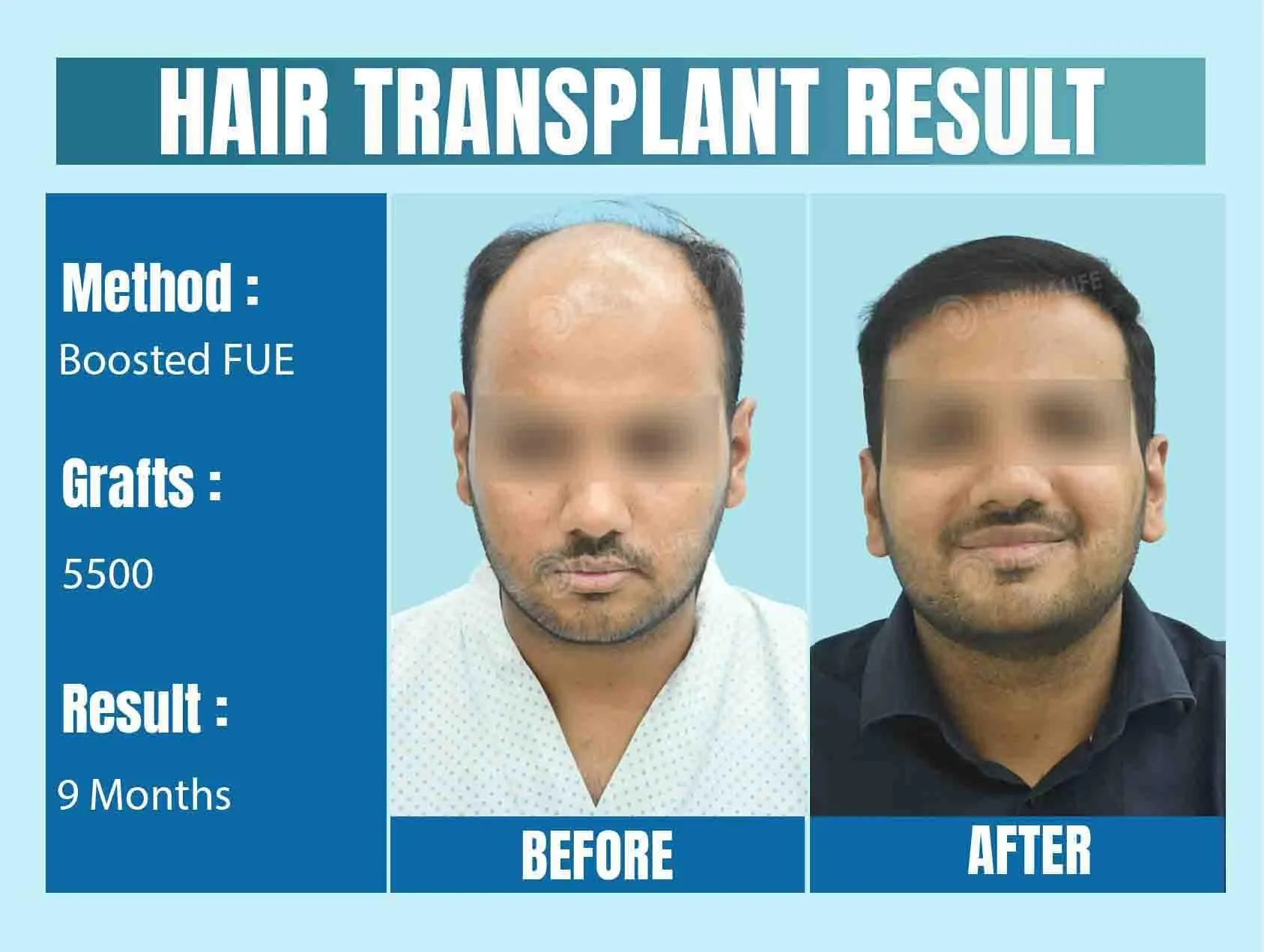
The clinic offers FUE-based hair transplantation and its Boosted FUE approach. Treatment planning considers the patient’s hair loss pattern, donor hair availability, crown size, and long-term requirements.
What Results Can Patients Expect?
Hair growth after transplantation is gradual. Transplanted hair may shed during the initial weeks, followed by new growth over the subsequent months.
Visible improvement generally develops over several months, while the outcome may take around 12 months or longer depending on the individual case.
Patients should follow post-operative instructions and attend recommended follow-up appointments. Results vary according to graft characteristics, scalp condition, and individual healing.
Final Thoughts
A hair transplant can improve crown baldness in suitable patients, but the procedure requires careful attention to the natural whorl pattern, graft distribution, and donor-area preservation.
Anyone considering crown hair restoration should consult an experienced hair transplant surgeon for an individual assessment. A well-planned treatment should consider not only the existing bald area but also the patient’s future hair loss pattern.